How Anduril Tried to Kill Democracy in Ohio (& How Farmers Fought Back)
[00:00:00]
Hey there. Welcome to "Computer Says Maybe." This is your host, Alix Dunn, and I am back from our summer break with a story that probably sounds familiar. , If you will recall, I recently sat down with KeShaun Pearson to talk about what happened when xAI decided South Memphis was worth sacrificing to build one of the largest data centers in the world without asking anyone who actually lives there if they wanted it.
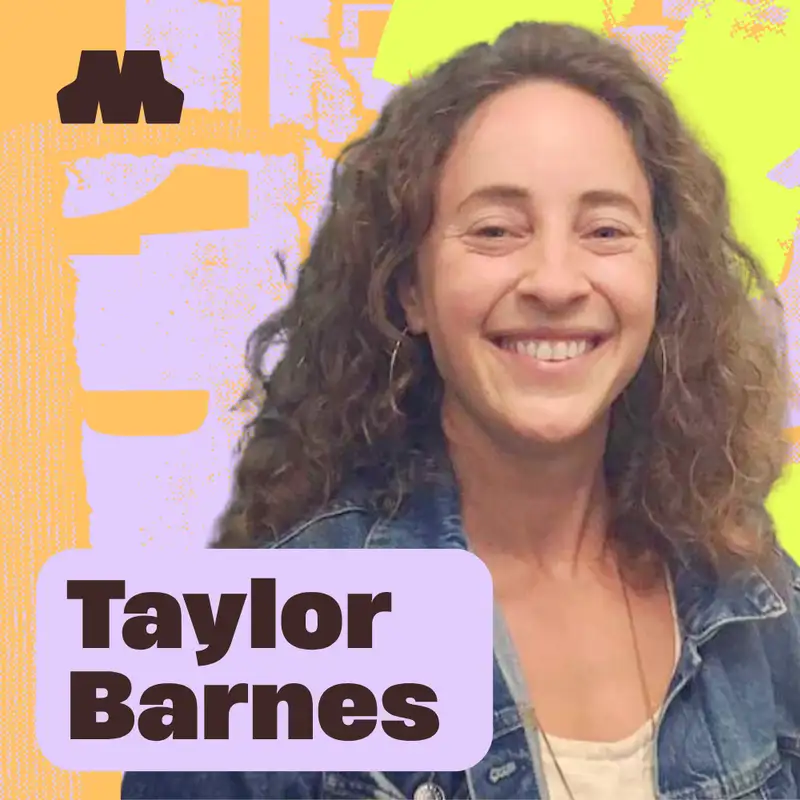
, Today's story is a different company, a different technology, and a different US state, but it's the same playbook basically beat for beat. , In this episode, I'm talking with Taylor Barnes, a field reporter with the nonprofit outlet Inkstick Media, about Anduril. You may have heard about it. It's a weapons company that's become one of the Trump administration's favorite defense contractors.
And this is a story about what happened when it decided to build a new drone and cruise missile factory in a small farming township in Ohio.
Like [00:01:00] Memphis, this is one story in one small place, but it's also a preview of the same fight playing out in community after community. Wherever a big enough company decides that local rules are optional, they hide who they are, they get loads of tax breaks, and if people start to organize to stop a project, they change the law before local people can use it.
And still, even against a company this well-resourced, this is also a story about a community fighting back, and that fight isn't over. So here's my conversation with Taylor Barnes.
Taylor: My name is Taylor Barnes, and I am a field reporter with a nonprofit outlet called Inkstick Media. We cover endless war. Within that, we cover the arms industry
as, you know, a very important component in, , what keeps the United States endlessly at war. And sort of my interest is the people and places tied up in what is nowadays a trillion-dollar Pentagon budget.
And that's what brought me to Ohio
Alix: okay, so let's [00:02:00] jump right in. What is Andril?
Taylor: So Anduril is, we sort of describe it as the leader of the pack of a new cohort, new generation of Pentagon contractors, i.e. defense contractors. They would call themselves defense tech companies, and it's a term that we kind of dispute. they will say that they are taking on ~the likes of the quote unquote "dinosaurs" of Lockheed Martin, RTX, Northrop Grumman, et cetera,~ much more established military suppliers who make the vast majority of weapons for the US military.
And they say they're going to use different manufacturing processes, different business arrangements, selling weapons much more like a commercial item, doing their own research and development, front end rather than waiting for the military to tell them what they need. And so Anduril's sort of the leader of the pack in terms of both its marketing and hype machine and indeed winning some pretty coveted contracts, most notably a prototype contract for the Golden Dome, which is the would-be missile shield over the United States.
~It's kind of a rehash of a Cold War project to do the same thing, that is basically the flagship weapons project and spending project of the second Trump term.~
Alix: ~ ~Okay. So basically your disputing defense contractor because there's
Taylor: Yes [00:03:00]
Alix: technology primarily?
Taylor: Well, really, disputing more the term the defense tech startup. ~Uh, all of the companies that are supplying the Pentagon with weapons will claim that they are tech companies and that they are on the cutting edge of technology. The truly defining feature of the likes of an Anduril, are generally its funding models.~
Whereas the likes of a Lockheed Martin, you know, a Northrop Grumman often date back to, you know, the Second World War, um, legacy aircraft manufacturing operations or shipyards. ~Whereas~ a company like Anduril, really comes out of the world of venture capital and, you know, tech bros trying to find yet a new client to sell something to, and in this case, the Pentagon.
Alix: Okay, so you say tech bro. I feel like this is where saying a little bit about this company is interesting, 'cause he's a unique breed of tech bro, or at least his sense of style, I would say, is unique. But do you wanna say a little bit about Palmer Luckey? Yeah. So
Taylor: Yes. So Palmer Luckey's quite a character, and once you come across him, you kind of can't unsee him. He tells an origin story along the lines of how he was already tinkering in his parents', I forget if it's his base- the basement or van, coming up with, you know, different tech [00:04:00] products even in his teens.
He would go on to build a video game virtual reality, headset called Oculus that he sold to Meta. He was a Facebook employee. He says that he got fired from Facebook for having donated to, um, Trump's campaign back in 2016. Goes solo and then, uh, enters the world of weapons manufacturing, and weapons production.
And Anduril made a bit of a splash when it published a sort of white paper called Rebuild the Arsenal, in which it laid out its vision for taking on what they called, quote unquote, "the dinosaurs of the defense contracting world."
More conventional defense contractors, it, it would never look good for it to hear the executive of Lockheed Martin say something like, "We look forward to coming war with China," even though, yes, that would be good for their business.
Palmer Luckey will all but say that. And he paints it as, you know, a very, hardened reality that the world is such a very dangerous place and the United States needs to just have, mass productions of cheap weapons. One [00:05:00] word that you'll hear in Pentagon spheres is attritable, which means rather than one great exquisite weapon, the, the antonym of acqu- attritable, if you will, lots of cheap weapons that can be shot down over and over again, and you just make them in your big, you know, lean manufacturing operation over and over again, and you have drone swarms that are, you know, meant to be here today and gone tomorrow.
Alix: When did you first find out about this new mega facility in Ohio?
Taylor: So one reason I was on the lookout for what, you know, where the mega facility would be, in Anduril's own, again, sort of splashy white paper, it claimed that it would not have manufacturing operations all across the country, and that it would have one mega factory that was to be its lean, flexible, make this weapon today, that weapon tomorrow, factory.
contrasting with, uh, for example, a famous case in sort of the Pentagon, budget space is the, is Lockheed Martin's F-35, which literally has production facilities in, like, basically every state and almost every congressional district. Uh, A political scientist would call this [00:06:00] political lock-in when you have a weapon that, like the F-35, it only works one-third of the time.
It's literally only combat-ready one-third of the time because it has so many bugs and so many defects. It explodes, it's killed pilots. But why does the US and allies continue to buy it year after year? May very well be tied into the fact that Lockheed Martin has done a great job at, strategically putting jobs and investment and operations in so many places that members of Congress care about.
Anduril claimed it would do differently. It is quite already deviated from what it laid out in its white paper just a few years ago, and it actually already has operations in Mississippi, Rhode Island, here in Atlanta, California, um, and Ohio. However, Ohio is where it claims it will have its mega factory, um, a mega more campus, if you will, um, five, five to six million square feet, in the vicinity of a former military base called the Rickenbacker Airfield.
It still is used for some military purposes, a mixture of sort of military, and non-military purposes. And it is currently [00:07:00] producing drones and cruise missiles there. The drones it's producing is fa- called a collaborative combat aircraft. So I, I both use them using the terms, I think we have to know kind of what they're producing, but I also want to kind of put this in layman's term.
Anduril likes to claim it's producing a whole new generation of different stuff. A lot of the stuff we've seen, it's drones and cruise missiles. So, but that would be that quote-unquote collaborative combat aircraft is meant to be, part of this whole attritable idea, of, if you will, flying a bunch of decoys next to your weapons, or as Anduril and the Pentagon call it, wingmen, to fly alongside a manned fighter jet like the F-35.
And what's the purpose of the wingmen? One, it's a decoy. It makes your enemy have to shoot down more stuff. And two, supposedly it will autonomously integrate with the manned fighter jet and, be able to carry out some sort of offensive capability on its behalf. But, I like to kind of add some skepticism to these claims.
Anyhow, what it's making in Ohio [00:08:00] are drones and cruise missiles, which again, have been around for quite some time.
Alix: Okay, so this new facility drones Cruise Mussel is going to Ohio, which feels... I d- I can't imagine exactly why they would pick Ohio, it was supposed to be, they claimed it was gonna be like the largest job-creating project in Ohio's history.
Taylor: Well, uh, so, uh, Anduril announced this mega plant that it would be constructing, and again, from scratch. These are not preexisting facilities except with one, well, I will give one exception.
One, one is very much a preexisting facility. It announced this early into, 2025, within a few days of Trump's inauguration. It very much fits in with the rhetoric of the current secretary of war, I mean, Secretary of Defense, Pete Hegseth, which is over and over again claiming that the $1 trillion, Pentagon budget, which they hope will be $1.5 trillion next year, is creating a, quote-unquote, "boom in American manufacturing and getting people back to work know, a renaissance in great American building."
So again, opening up a giant [00:09:00] factory in, you know, a Rust Belt, state that has suffered so much from de-industrialization is quite a good look for a company that's very much allied with, the current administration and the current Pentagon.
Alix: So why do you think they picked Ohio?
Taylor: it is a, it is a good location in terms of having a preexisting, military airfield right next to where the plant is going to be located, which will allow both for testing and both for shipment of its weapons. Two, it's pretty politically salient.
Anduril saw it prudent to locate its plant in the political home state of the current vice president, who may very well be the next Republican nominee for the presidency. So that would be one important political calculus behind it. Another extremely important calculus behind it is that Ohio rolls out the red carpet when it comes to tax breaks and subsidies, on just a magnitude higher than other states.
A-Anduril and the governor, Mike DeWine, claim that this project, which they claim will employ, employ 4,000 people in its eventual manufacturing operations, is the absolute largest job creation project in state [00:10:00] history. Hyperbole is quite common in economic development.
Economic development is the world of tax breaks and, quote-unquote, "incentives,"
Anduril's tally of tax breaks and subsidies in Ohio is close to a billion dollars. It is quite significant in terms of, you know, more than 30 years of property tax abatements, literally, no property tax payments, job creation tax credits. There's a scheme that's common in economic development in which, any increase in the value of surrounding properties, a new plant, whatever it may be, then becomes diverted to pay the needed infrastructure funds that pay for that plan.
So like, whatever, repaving the roads, new sewer systems and whatnot. Anduril benefits from this. Will it create 4,000 jobs? Well, when you look into the fine print of its economic development records and contracts, there are many loopholes that basically say if they don't create it, they still can get all the tax breaks.
Ohio has a serious transparency issue when it comes to tax breaks, but just last year, the Ohio State government conducted an audit of companies that receive tax breaks and [00:11:00] subsidies and found that nearly half of them did not create the promised number of jobs, but almost always still got the full tax breaks.
So will it create 4,000 jobs? I mean, their timeline for doing so, they claim, is at least 10 years out anyway. There's not gonna be accountability for a long time. They've written themselves some pretty hefty loopholes into their contracts anyway, including one that describes how if the defense contracting market becomes unfavorable to them, they may not be able to create their promised jobs.
Which is to say, if the federal government decides not to buy our stuff because the administration changes and I'm too aligned with Republicans, maybe I won't be able to create all these jobs because I won't get as many contracts as I want.
Alix: did you find out that the facility was being proposed in this particular area, and how did you get into figuring out kind of the community response?
Taylor: So I first found out about, you know, where this, this factory would be in early 2025 via a very splashy announcement from the Ohio State government. It was literally on the front page of "The Columbus Dispatch," a giant headline that [00:12:00] says, "Ohio Lands Drones 4,000 Jobs." And the governor himself put out kind of like a little social media meme, if you will, that at the very top says, "Largest job creation project in Ohio state history."
And I mean, you can kind of roll your eyes at this, but this rhetoric, that narrative of, like manufacturing job creation is so powerful, and it is like the key marketing tool for a variety of companies and very much for defense contractors. So I found out about it in early 2025, and I think what interested me was that many of the more traditional, conventional defense contractors, Lockheed Martin, RTX, all of them, they're often using preexisting spaces.
There's kind of no shortage of brownfields across the United States, and so it interested me that Anduril was really in a w- with an asterisk, I'm gonna put on it, trying to build something from scratch.
And I was sort of curious about what choices led it, to do so and how the community would react to that, right? I mean, look at the [00:13:00] gigantic backlash happening across the country to data center build-out. The Anduril facility is, you know, similarly taking over an otherwise quiet, productive agricultural, you know, farming community.
So that, that sort of came to my attention. I found out with time that Anduril was kind of sneakily making good on its, marketing and promises, which was it claimed it was going to set up a new arms plant in record time. In just one year, it was gonna be shipping new drones out the door.
How did it do that? It didn't actually build a new weapons plant. It actually just rented a preexisting warehouse and it painted it black, and it put an Anduril logo on it.
It is indeed now currently trying to f- trying to, you know, buy up land and build out the rest of its campus, but I would posit that much of it can very well be in jeopardy and that the company itself appears to not quite know what it actually wants to do in Ohio. It's put out multiple renderings of what its plant would look like.
Its own contract list, its own property tax break contract list, like variable, footprints that it could have. So I would say that Anduril kind of has a drawing [00:14:00] board in Ohio at this point.
Alix: Okay, so they pitch this giant project. It's gonna create all these jobs. We don't know exactly what it's gonna look like. It's gonna be starting from scratch, but also maybe not. And we come to this town 'cause a project l- of this size obviously has to get approved by local government.
Taylor: Yes
Alix: So enter your, friendly local representatives who have to, like, like, do we let this project go ahead given the kind of national pressure probably coming from the likes of the JD Vances of the world. Um,
But what happened? Like, what step did the company have to take to begin that approval process, and, and what happened?
Taylor: Right. So one, it's very much a story in which the company can tell you, "Yes, we got all the needed approvals." In practice, the public's ability to have a say was just next to nothing for a variety of reasons. One, to give one example, this is sort of just one cut of [00:15:00] how Anduril came to town. One of the many tax benefits it gets, is to not have to pay taxes to the local government, which then defunds the local public schools.
That's a hot button controversial issue. , Local voters very much care about their school funding and the condition of their local schools, and you would think that would be something that would be debated, that would be, you know, subject to public meetings.
Alix: So wait, you're gonna hire 4,000 people potentially coming in from out of town, which puts a strain 'cause a lot of them
Taylor: Yeah.
Alix: families,
Taylor: Yeah
Alix: students entering a school district and you get this surge of people. But the facility which would normally be contributing to a property tax base that would fund schools is being told, "We will let you just, like, not pay those taxes"?
Taylor: 100, yes. It literally gets a 100% property tax abatement for 30 years, but it's not just for 30 years. It's like a staggered 30 years. Every time a building comes online, locals describe this to me as like, "I'm having a kid. My kid will still have to pay higher taxes [00:16:00] because Anduril is not."
Like it's that long of a property tax abatement. It pays a voluntary amount that's called payment in lieu of taxes to the schools. That is a fraction of what it otherwise would've paid, but it gives-- it covers Anduril's butt, if you will. It allows them to say, "We do pay the schools.
It's this tiny amount that's like laid out in this little voluntary contract."
Alix: "Payment in lieu of taxes." Yes. What an expression.
Taylor: It tells it all, and this is so common in the world of tax breaks and economic development, is to find some other way to cover yourself and claim, "Oh, no, who, me, get 100% property tax abatement? Well, I pay this other small fee to the school instead."
So again, you would think this to be a co- a very controversial issue or, you know, one that the community would wanna have input on. The day that the Ohio governor announced that Anduril was setting up its weapons plant in the state, the, school administrators in the affected school districts who knew this was coming down the pipeline but had not publicized it, emailed their school board.
So the school board is the one tiny democratic check that would've existed [00:17:00] on this process. They are literally the body that could've been like, "Wow, that's a little bit too much tax break. We're a needy school." And told them, "We need you within 24 hours to approve this, massive 30-year plus contract for tax breaks for Anduril."
And what happened? They all approved it. So again, this is just one of the many ways that the public gets really shut out of, of these deals. Another way is obfuscation that is very common in the world of economic development and tax breaks, which is to say these companies, when they're, coming to town, they operate under code names that conceal the actual identity of a company, and they will claim they're doing so because they're protecting trade secrets and secretive business dealings in practices widely criticized as a way of shutting the public out of the process.
And again, I heard this from p- folks on the ground. They would say things like, "You know what? I could understand giving a few years of tax breaks to a mom-and-pop shop or like a, you know, longstanding Ohio company." But if they know it's a billionaire-owned [00:18:00] Silicon Valley venture capital-backed defense contractor of all things, they're gonna feel very differently about giving, 30 years plus of tax breaks to that company.
But they don't know who it is. They don't know who it is when it's coming to town because they use code names to hide the name of the actual company. So do you want, would you like to take a guess at what A- Anduril's code name was?
Alix: I don't know, like Mongoose or something. He seems like a real weirdo. But yeah, what is it?
Taylor: Anduril's code name was Project Thor,
uh, and which then, if I may,
Alix: Such dorks. How are we colonized and oppressed by such dorks?
Taylor: I know. If I may, I'm sorry, I'm, I'm deviating for a second, but the best codename I've come across in the reporting on these economic development deals, one for Northrop Grumman in Utah, where it is making nothing short of nuclear weapons, like literally the missiles that will travel across the globe to deliver nuclear warheads.
Its codename was Project Unity, which I thought was hysterical.
um,
Alix: I think it was Meta in the Netherlands was trying [00:19:00] to hide in nested LLCs a data center project it was gonna develop, and they called it Tulips. Um, which I feel like is like too on the nose. I mean, it's
Taylor: Right
Alix: but it's also, you know, the famous Ponzi scheme of tulips, which just
Taylor: That's so funny
Alix: know what they're doing in a way that is pretty, yeah, pretty gross.
That's amazing.
Project Thor. Okay, so
Taylor: Yeah. So Project Thor is coming down the line,
and what's happened-- Also, furthermore, Anduril, in another twist, does not actually own its properties in Ohio. So if you look at property tax records, you'll instead see a commercial real estate company that nowadays locals know is closely associated with the company.
Why does it do this? I've asked the company, they've given me no, answer as to why they don't own their facilities. It strongly appears, in the world of, you know, venture capital-backed companies, they often prefer not to own their actual facilities because it's seen as a, quote-unquote, "liability," that investors would see as, you know, wow, you're gonna owe taxes on this.
You're gonna owe repairs and maintenance, whatever.
Alix: It's also
Taylor: it,
Alix: their [00:20:00] balance sheet
Taylor: So leasing it becomes, it becomes a more favor-- a way to almost, you know, to make your balance sheets look more favorable in the eyes of your investors. All of which is to say that when locals saw some giant industrial operation was buying up farms across their town, seeking rezoning approvals, they didn't know who it was.
They didn't know it's a billionaire-owned defense contractor. I like to add that in because some of the dissidents locally have told me they've been accused of being anti-military, anti-veteran, whatnot, not patriotic, and they're like, "We didn't know who it was.
All we knew was someone was buying up our whole hometown and changing our entire way of life."
Alix: So you, you explained how basically from the outset, the process was designed to exclude community members from meaningfully understanding what was happening, Yeah participating in a decision-making process around what was happening. The community did not want it ultimately.
Did they not want it at the beginning or did they not want it once they had been denied the opportunity to participate in the process or was it much for [00:21:00] muchness?
Taylor: It's tough. I think in the beginning when community members did not know what was coming down the line... we're talking about a very small population. This is a township of 1,400 people, so every opinion matters,
Many community members were very concerned because this actually is an active farming community that literally raises cows and soybean and hogs and corn. And people make their li- both make their livelihoods off of it, and they have, you know, farming heritage and family traditions um, I mean, I've spoken with farmers that have multiple generations on the same farm. This is just a rare place where family small-scale farming operations are continuing. It sits on top of a, a great aquifer that also farmers have described as, once it's polluted and gone, it's never coming back.
So many locals were opposed. I will say, once the governor announced that this was Anduril and that 4,000 job creation claim became widely publicized, I would hear some people say, "Well, our young people do need some place to go work.
Farming isn't that profitable anyway." [00:22:00] but mostly I heard so much, what's the word? People just describing it's inevitable, like saying, "Well, you know, who am I to challenge what the federal government wants to do here?"
That said, opposition is still alive and well, and it's far from a done deal. Like I said, you know, Anduril claims it's making this large manufacturing campus in Ohio. What it actually has is a preexisting warehouse it painted black and now an additional facility it's constructing next to it. So the campus is far, far, far, far from a reality.
Alix: Okay, so this thing comes in, it's gonna be this massive project. get a nominal yes, on some of this, like, sweet deal
Taylor: Yeah.
Alix: around property tax, et cetera. The community's like, "Wait, what? This is a billion-dollar company," maybe more like, we didn't get to in a decision about this?
This seems bad, Like, so how did the community do an, uh, like a 180 and kind of recapture leverage in the process?
Taylor: first to go back, pre-community knowing that this was Anduril, twice locals gathered enough signatures to [00:23:00] get the rezoning stopped by.
What they didn't know was Anduril. They just knew it was some commercial real estate company buying up property in their town and seeking re- it's interesting, zoning can sound like it's so boring and hyper-local, but it's like a very democratic arena in which communities decide what will our community look like.
So twice local farmers got enough signatures, to get these rezoning attempts put to a local ballot measure. And twice they were thwarted on hyper-technical grounds that they very much dispute, claiming that they, they would get the local board of elections would throw tons of signatures out.
The local developer behind the plant intervened and protested and, sent letters to the, board of elections saying, I'm hoping you will scrutinize these signatures closely." Their referendum attempts were twice thwarted. Again, they didn't know who they were up against.
They just knew that their hometown was being bought up for some sort of industrial operation. When folks found out it was Anduril, there was both a sense of inevitability, but there was also both [00:24:00] a sense of, "Oh my goodness, like this truly is putting us on the map, and this is an operation that can be quite dangerous for us or quite risky for us," right?
Both in terms of the environmental impact and also, I mean, multiple residents told me like, "Look, this puts a bullseye on our community. This plant claims that it is creating the next generation of weaponry for war with China.
Folks most certainly got fired up about it as well, both in the community, i.e. the constituents who actually can have a say, and those in and around it, who've sort of, who've banded together in a big coalition they call No Ohio Anduril Plant. That brings together sort of a wide variety of, activists, advocates, watchdogs, with a variety of angles on the issue
Alix: Can you talk a little bit about Anduril's response behind closed doors felt the resistance started, to mount and maybe a little bit about the emails that you got access to?
Taylor: So like I said, locals have really been shut out of this process, so any opportunity they have to speak up about this weapons plant, they take. [00:25:00] Including late last year, there was a zoning hearing for yet another additional parcel that the real estate company associated with Anduril had purchased and was seeking to rezone from rural to industrial.
And lots of local opponents and dissidents showed up to speak out against this. And I saw one farmer stand up, you know, wearing a baseball cap, and just spoke about how angry he was. And he said, "You know, we've been shut out. We've tried so many times, to challenge this development.
And then he said something, he said, "This year, the budget bill passed, the budget bill in the Ohio State House includes a measure that quashes citizen ballot referendums." And then one person in the audience said, "I'm sure there's no coincidence," because they had done just the exact same thing.
And I heard that and I thought, "That's a really bold accusation." Like they're, they literally are claiming that someone in the state, state house targeted them. And I reached out to the farmer and I said, you know, "Do you have proof? Can you show me which, you know, what, what measure it was in the budget bill?"
And he said, "Look, like we know no one else this applies to. Can we prove they targeted us? [00:26:00] No. It's, it's too on the nose." And the farmer showed me a zoning application submitted by the developer behind Anduril that explicitly cited the newly passed, budget bill amendment that says, It's tailor-written and says citizen referendums cannot take effect when they concern a, quote-unquote, "megaproject."
Megaproject is, if you will, a quasi-fictitious category in Ohio for large industrial developments, large corporate developments, that'll confer special treatment on them. And Anduril is claiming a variety of benefits as a, quote-unquote, "megaproject" in Ohio. I
So
Alix: if a project is sufficiently large,
Taylor: Yes
Alix: the public is barred from participating
Taylor: Yes.
Alix: whether...
Taylor: Yes. So funnily enough, when you-- the actual language of what is a mega project has been so watered down, there's not actually that many numerical criteria for it. It, you know, increases payroll by this and that amount and has high utility needs, and [00:27:00] it has some kind of, it has some criteria, but they're not even that, not even that ambitious.
That said, so the farmers noticed this little tailor-written amendment targeting what appeared to be their past referendum atta-attempts. . They could not prove it targeted them. Then a very crafty, astute democracy activist in Columbus, who I had been in contact with, had once detected and kind of sniffed out lobbyist activity behind a sort of an, like an environmental dumping measure he'd been tracking, and suspected very accurately, we would learn, that it was not just a lawmaker collaborating with Anduril, it was the lawmaker from the exact district that Anduril is located in, i.e.,
The ones who should be looking out for his constituents and his community. And not only is he the law-- is he the state rep from the exact county that Anduril is located in, but he chairs the House Finance Committee, which is, the powerful committee that oversees the state budget each year.
So this astute democracy activist sent off a records request. In Ohio, this doesn't happen in all states, but you can get [00:28:00] lawmakers' emails. And so he sent off a well-written records request for, "I want all communications with this office that contain the following terms: Anderyl, mega project, tax breaks," et cetera, et cetera.
And within a few months, he got hundreds of pages of emails, shared them with me. By some, if I may, some divine coincidence, I happened to be in the car with a democracy activist driving to the Anduril plant, and he said, "You won't believe what happened. I just got hundreds of pages of emails between this and that of a state representative's office," and Anduril's registered lobbyist.
And what, what made us laugh was there was just no cloaking of the language. It was so abundantly obvious. The And- the email was titled Anduril Zoning Amendment, and it had a paragraph that said, "This property keeps getting put to referendums. We can't let that happen.
Anduril needs to be rezoned. Let's write an amendment that says that mega projects cannot be subject to citizen ballot initiatives."
The emails sp-spoke for themselves. We reached out to everyone for comment, Anduril, the state representatives, the lobbyists, and nobody has said anything.
Alix: I mean, I feel like [00:29:00] there's such-- there's also just such an irony, this rebooting the arsenal of democracy, 'cause when you hear the arsenal of democracy, which is this white paper that Andrew wrote, the arsenal of democracy sounds like people participating in process. Like, it sounds, so substantively connected to the very thing that they're entirely subverting by doing this.
I feel like with all these data centers being built out, all of these, you know, you look at what's happening in Memphis with xAI and how much community... Actually, in that case, the community didn't even know about it until after it was built, and
Taylor: Wow
Alix: have been taking part in all these lawsuits to try and stop it and shut it down because it's actively poisoning kids in Boxtown.
Um, and they've also been doing some shenanigans around property tax where, um, there's a new benefits organization that KeShawn Pearson is the chair of. But all he gets to work with to repair the harms of [00:30:00] xAI is a proportion of the property tax that they're paying, which is not actually based on the true valuation of the facility.
So it's a deflated tax contribution, and then a proportion of that property tax contribution, I think the total is something like $3 million that they get to work with, is supposed to repair, you know, these
Taylor: harms
Alix: jumps in childhood asthma, these huge, noise complaints and noise issues with the facilities.
Um, all while, you know, Black representation in Congress in Tennessee is being gutted and, like... I mean, it just feels like such a massive backsliding in the expectation of how people are able to have self-determination in their
Taylor: Yes
Alix: backyards. Do you have reflections on this kind of broader trend that big tech just shows up, sort of does things that seem illegal, a-and then just kinda keeps moving and so doesn't ever get held accountable for what they've, what they've done?
Taylor: Anduril appears to be doing a very [00:31:00] similar scheme to the devaluation. Going back to the, you know, big tech and these local democratic rights. First of all, like I said, zoning sounds boring. But it really is like this highly democratic sphere in which local communities can say that what they do and do not want to live next to. And when it's subverted, I mean, it's, it's the most-- one of the most local forms of democracy, being subverted, and that's exactly what Anduril did in Ohio.
I would posit to a degree, that these big tech companies coming in, subverting democratic processes to set up operations, comes on the long trail of the military industrial complex doing that over and over and over again, and using, national security, communist threat, Cold War era, , threat inflation as its justification for doing so, and that that rhetoric often worked well, if you will.
It did often quash local dissent and local challenges. And what I've noticed now in the tech space, including Elon Musk's, um, xAI in Memphis, is they're trying to appropriate the language of national security to stave off challenges, [00:32:00] including that NAACP lawsuit, getting the federal government and the military on their side saying, "Well, this AI model is one of our few approved
AI models."
Alix: The idea that Grok, which spends most of its time, creating non-consensual sexual imagery and, like, is a national security asset to such a degree that you should dismiss a lawsuit from the NAACP and the Southern Environmental Law Center, just-- Like, basically it's let's create a veil of immunity over this cohort of dudes, and, like, let them just do whatever they want, wherever they want under the auspices of something that, like...
I don't know. I can't really figure it out. SpaceX xAI's bundled into SpaceX, as an IPO, I mean,
Taylor: Yeah.
Alix: anything for the economy. It's not really
Taylor: Yeah
Alix: for the military. We're, like, getting our asses kicked.
Taylor: Yes.
Alix: like, it's really wild to watch this enrichment of such a small number [00:33:00] these, like, dorks.
Taylor: And like I said, I mean, to use that rhetoric and those, you know, that national security rhetoric to stave off challenges has such a long history, long before AI came around and long before data centers came around. I mean, in the early days of the Cold War, when communities would say like, "Hell no, I don't want to live next to a ballistic missile silo.
That's clearly bad for me." Um, the US set up so much
Alix: yeah
Taylor: military infrastructure on its own territory, that people would have to neighbor and live next to, and people would suffer the ill effects from, and using national security justifications and threat inflation and hyperbole and communist threat and whatnot to sort of quash local dissent, you know, amongst Americans, amongst local voters.
Is it emboldening the other defense contractors? Like, do you see that, like, used to be a little bit more buttoned up and like, "We're here to be a part of your community," or whatever. Like, are they now being like,
More forceful?
Alix: that?"
Taylor: I'm not sure I've seen that exact behavior. What I have seen is just the rightward [00:34:00] cultural shift in which defense contractors are realizing, "Wow, we don't have to probably sponsor an LGBTQ parade anymore. It was kind of a misfit anyway."
So our reporting fellow last year did a bit of an exposé on, the Human Rights Campaign, which is the largest LGBTQ, I believe, legal advocacy group in the US, dropping Raytheon and Northrop Grumman as corporate sponsors, which, you know, it's a misfit anyway. Those are some strange bedfellows to be in.
However, for a time, that sort of, that marketing, that affiliation actually did suit those more conventional defense contractors, and they are dropping those pretenses and having a more openly hawkish rhetoric you know, if you listen to their quarterly earnings calls and whatnot, they are more openly hawkish about describing ongoing war as good for them.
Which in the past they would slip up and do so, and I feel like the new breed of, Palmer Luckeys of the world are making it more acceptable to say that.
Y-you had mentioned, you know, xAI, you know, the Elon Musk data center in Memphis sort of [00:35:00] artificially deflating its value in order to pay less in its community benefits agreement, i.e.
that's, that's, it's a parallel to what I described, the quote unquote, "Payment in lieu of taxes," which, I mean, wouldn't all of us like to pay something that's not our taxes?
Alix: Much smaller amount, uh,
Taylor: I, uh,
Alix: this is a payment remove taxes. Like,
Taylor: Yes. Uh, what I will say is Anduril strongly appears to be doing the same thing in Ohio,
The high figure that they have publicized widely in the media and that is on the record in their contracts is them promising something like $900 million in building costs and land costs and land preparation and whatnot. The purpose of that is to say, "You should give us lots of tax breaks.
Look how much we're putting into your community, because we're clearly gonna be here for a long time. We're spending so much money setting up this factory." But when it comes to getting taxed, it's a whole other issue, a whole other set of figures they appear to be working with. , I strongly believe, and I have been told by multiple folks in Ohio, a document should exist amongst local officials that approve their tax breaks that projects the value of the foregone revenue, i.e.
how much money are [00:36:00] you foregoing when you give more than 30 years of tax breaks to this company? After asking every entity, I just keep getting told, "No, no, no. We don't have it. We
don't
We just don't, we just don't have it." Therefore, however, there are other ways to come up with similar calculations and In a ream of school board records that I got, a rather low figure is included as a talking point for school board members that were that last democratic check on these tax breaks for Anduril, in which they claim something like $60 million is the value of their tax breaks.
If you plug and chug Anduril's own projected on-the-record building cost into the local property tax formula that you can get from the auditor any day, it comes to an amount that's like well over 200 or 300 million or so, something like that. Anyhow, Anduril also appears to be e-engaging in some sort of deflation and some sort of way to tamp down its property tax bill while still claiming that it's paying something, some nominal amount to locals, including their local schools.
The added twist on that is the local school is actually quite needy and has for [00:37:00] two years in a row gone to local voters and asked them to voluntarily raise their taxes on themselves to pay for school buildings because the school
is suffering from it. No, locals voted no. They voted no twice. They said, "You're taxing us too much anyway."
Locals had a big property tax jump around the pandemic era, and many told me it cost them hundreds, even more, more than $1,000 per year. And then two times in a row, the school came to them and said, "Please approve yet another property tax, "yet another tax increase on yourself to pay for these buildings 'cause your kids are gonna be studying in trailers."
One of the local schools posted a picture of its trailers on its Facebook page, which was then followed by lots of angry comments from parents of like, "I pay so much in property taxes. Why is my kid having to walk out in the snow to get to their trailer to study? Why can't we build those new buildings?"
Alix: Yeah, no, it's so wild.
Taylor: Yeah
Alix: the kind of narrative about the role of the company in society and this idea that policymakers are increasingly beholden to not s- not seeing companies as a [00:38:00] taxable entity. Like, there's something about it, like watching, I don't know, the way that Virginia and I think New York State were competing or not competing for, like, Amazon It, yep. Yep.
so pathetic
Taylor: Yes
Alix: local policymakers try their hardest to, like, gener- create jobs, et cetera, if you take the most good faith view on what it is they're doing. But these companies just being like, "Well, I'll just go somewhere else." And I just feel like it must be such a deflating thing as a person in the local community to say, "Oh, I guess we can't be a part of this process because if we were a part of this process, we would say no, and we don't, , know how to eat our vegetables or something."
Like, there's something so condescending about all of this decision-making that, like, communities need these companies, but the companies don't need the communities in this way.
Taylor: the power imbalance is so tilted you can never prove the counterfactual, like where would Anduril have set up had it not been for its nearly billion dollars in subsidies in Ohio? May very well have still set up in the political home state of JD [00:39:00] Vance, like, which is a pretty astute move.
I will say another thing that's kind of pulling the veil off of the world of tax breaks is the revolt against data centers. In the exact same locality, the exact same county, exact same local government where Anduril's setting up shop in Ohio, a controversial data center is also trying, to get permission to, you know, be rezoned, be constructed along with a power center that powers the data center.
Locals have revolted. They've told me things of like, "I want to sit on my front porch and, like, listen to the crickets chirping and see the fireflies and not, like, have, like, the humming of a data center covering it all up." And this is, I'm s- this is very emotional. I spoke with one grandmother who told me she lost her adult son, unexpectedly.
You know, she did not expect to outlive her adult son, and she likes to just go out on her porch and think about him in the evening, and that, like, the data center is gonna be, like, one mile away from her with bright shining lights, like, humming all night long. And I felt like this is, you know, a terrible thing to be deprived of.
Anyhow, all of which is to say, as the revolt against data centers has gained much more momentum, the same data [00:40:00] centers that were asking for tax breaks and getting them in recent years is now actively proactive asking to pay a donation to the local government. So what are they doing now? This is the whole twist.
The controversial data center is trying to get local buy-in and has claimed it will donate the precise amount to the school that it needs to construct its new building so students won't have to study in trailers. And nonetheless, parents are saying, "No, thank you."
Alix: I mean, I think this is what people fundamentally miss about the data center discourse, is that it's not about the technology, it-- necessarily. Like, I think for some people it's the march of set of products that are horrible and labor destroying and, like, have all kinds of environmental implications and, like, there's the financial of, like, they'll drive up, you know, the cost of our electricity or they'll drain water.
But I think fundamentally there's the reason it's so triggering and you see this anger, is it's basically saying, "We get to do what, what we want to your community whether you want it or not." Like, it's the lack of consent, and I think that is so [00:41:00] triggering, and these companies have been so, direct about it, and also condescending in their response as to like, "Oh, I'm so sorry.
Are you just like afraid of the future?" And I just I think that like when you see these deals, if you know anything about the t- the steps these companies take to try and make one of these projects happen, like they're the bad guy. Like I'm sorry. Like every single one of them, whether you're hiding the name of your actual company, whether you're requiring the redaction of basic information about the water and energy requirements of a facility that's gonna be in people's backyard for 15 years.
Whether you're pressuring local policymakers to change the law about referenda that publ- like, like you're the bad guy.
Taylor: Yes
Alix: people are reacting to that, that feeling of just being ridden roughshod, if that, that's
Taylor: Yeah.
Alix: Like
Taylor: Yeah
Alix: I don't understand why like it's not clear to people.
No one likes being told you're just gonna put up with it
Taylor: Yes, absolutely. I, I had a colleague ask me a similar question [00:42:00] about this Anduril reporting. Said like, "Look, like are folks, you know, descending against Anduril or is this just NIMBYism? Like, I don't wanna live next to a big polluting, arms factory that's flying drones overhead and that's, razing over all of my neighbors' farms."
And I think my answer is like, it's both. And like also if those drones and cruise missiles made people feel so safe that if they actually thought this made their life better, they would reconsider. But when I ask people, you know, "What do you think about they make?" And they kind of shrug their shoulders like, "I don't know.
The federal government wants to set it up here. It's a billionaire-owned company." Like Anduril has not really convinced them that these weapons are so deeply crucial to their day-to-day life and safety. To give another example, what is the closest residential neighbor to Anduril in Ohio?
It is a large trailer park, that's currently got sort of, sandwiched in by properties, one that Anduril occupies and one that the commercial real estate company associated with Anduril owns. Living in a trailer park is often, unsurprisingly, very financially disadvantageous 'cause folks pay for their trailers and they own them, and they often pay for them in installments, but they do not own the land beneath
them.
Alix: it's
Taylor: [00:43:00] And to get...
Alix: them.
Taylor: Yes.
Alix: like it's easy to move them, but it's hard to move them, and you can
Taylor: Yes.
Alix: the rent of the
Taylor: Yeah
Alix: that they sit on. Sorry, carry on.
Taylor: No, go ahead.
Alix: Rage about how Yeah. trailer parks are, are financially manipulated. No. So
Taylor: precarious. and so folks in the trailer park told me, and again, like you can like see some of the black from the Anduril plant, like when you're like in it, that one, they believe when they're buying their trailers that they're building equity, that they're building up home value.
But in reality, if they are evicted, it is so financially prohibitive. And often I've been told the trailers will like fall apart as you try to actually
move them.
Alix: so quickly as assets that
Taylor: Yes. Yeah.
Alix: yeah
Taylor: And the trailer park, I was told by locals there, used to be owned by a- an Ohio landowner who then sold out to an out-of-state, private equity firm, and they totally fear that like when Anduril comes wanting their land, that they are all going to be evicted.
And when you ask them what they need, they will say that they need like, improvements to their septic tank one of them said like school bus routes were disadvantageous to get to and from school. Like I said, basic things that people need in their community, let alone the fact they also, you [00:44:00] know, need so many quality of life improvements in like this very precarious place.
I mean, I spoke with an older fellow who told me that like his fear about the development boom was that one, he was a hunter, so he goes along these properties that he used to know all the farmers who own them. Now the farmers have sold out to real estate, commercial real estate companies, and he's going around with a gun hunting, which does not sound particularly safe, and when you're in the like realm of an Anduril full of security guards.
And he said the development boom has crowded out all the things that he would hunt and literally eat, his actual source of dinner. So it's just such an enormous contrast.
Not
Alix: to mention a lot of the needs of these communities who are, I think are kind of reimagining the role of government in lives. Like, when you see the increase in the general public's interest in socialism as a concept in the US, I think it's because they're kind of like, "Wait, like maybe there is a role for the state."
We've been told basically it's companies or nothing. And I feel like the contrast of like a billion-dollar company not paying tax, getting tax breaks to make weapons so that we can spend a billion dollars a day to participate in illegal war in Iran that [00:45:00] we're actively losing, while they are being, you know, pinched, like to such a degree that like they can barely survive.
I
Taylor: Yeah
Alix: co- that just must be galling to a level that like I
Taylor: Yeah
Alix: really wrap my head around. And then on top of it, to basically be for-- Your one inalienable right is to participate as a citizen or as a resident, and then you're told that basically you can't even participate in that process to say yes or no.
Taylor: It's gross., it is, it's, it is shocking to actually see up close. I, I, I wanna say this with respect and say this in a way that I, do not want to come across with, you know, any stigma. But I just-- One thing that's just really struck me when I visited the trailer park was how many folks were missing teeth.
It was happening over and over again with including young people. I mean, I met the, the farmer, I mean, the, the hunter I met appeared to have almost no teeth. I met a young recent high school graduate who was missing his entire top row of teeth. I met a young mother who was missing multiple teeth, and I thought, like, [00:46:00] this is a community that is missing this, like such...
Like, when it's happening over and over again in a community, it's not like, oh mu- a one-off must have happened, someone broke a tooth. Like, this is clearly a systemic issue, with health and human needs being met. And like, the contrasts could not be more enormous. It's like sitting next to, like, a Republican mega-donor's weapons plant.
Like, that's literally what it is.
Alix: And the first response, like when I, when I think about that, is that dental care is expensive. Yeah thing it's, like, significantly less expensive than is war.
Taylor: Exactly. Exactly.
Alix: and I think that there's this idea that like, I don't know, that people are just worth less, and that we
Taylor: Yeah.
Alix: shouldn't invest in people, and that these
Taylor: I know
Alix: threats are this, you know, we should just dump all of our money into, into all of it.
And it's, yeah, I mean, it's, it's really disgusting. And I think that you almost always find that level of corrupt allocation of
Taylor: Yeah
Alix: collective resources n- right next to where you see people who are not-- who are [00:47:00] being failed, by those collective resources that we should be using to, to support them.
Taylor: Absolutely. And to sort of, , look ahead and say,
Alix: Yeah, what's gonna happen in,
Taylor: yes."
Alix: community and also what can listeners do? We have a lot of people listen that are, experts on these topics in a variety of ways, some people that are always looking for ways to be useful. Like, what could a normie do about what's happening in Ohio and what's gonna happen in the next few months?
Taylor: Absolutely. So well, one, looking ahead, the lawmaker who colluded with the Andril lobbyists to suppress these referendum rights, he wasn't just any lawmaker, he was literally from the exact district where it is going in. And he is up for reelection, and folks are angry. And I have been seeing our reportings, uh, you know, cited in local, local community groups, Facebook groups, and whatnot.
And similarly, similar anti-referendum measures are also targeting critics of data centers in Ohio. And so folks are sort of connecting the two issues and seeing that their local, their local right to vote on what happens in their community is very much under assault. And the data center [00:48:00] issue in the same, I'd say the same county, same local government, in Ohio is a very alive and well one.
I believe next week there's, like, a contested meeting occurring at the, one of the high schools, near Anduril about the proposed data center, quote unquote, "donation." So anyhow, folks on the ground are angry, and I, believe the lawmaker is, the lawmaker indeed has an opponent.
He has a Democratic challenger, who's very aware of the anti-referendum measures and has been, discussing them and sharing them with local voters. So there's an ongoing contested election coming up. As far as how listeners who care about this issue can help, I will say that the two farmers who have been at the center of trying to get this issue put to a referendum could use some legal advice because this is a tiny town, and they really, found themselves in a battle that is so David and Goliath and so much larger than themselves, and have been trying to challenge the developers in court, but, describe coming to these, court hearings and meetings as just, facing an army of suits, and really being outgunned.
So, uh, anyone with legal expertise, especially if they're interested in zoning local democratic [00:49:00] rights, should definitely, reach out and be in touch with the farmers who have been challenging the plan, who we featured in our story.
Alix: So good, which we will link to in the show notes. But I really appreciate you kind of taking us step-by-step through this, 'cause I think, it's just such an incredible story that increasingly is becoming n- the norm at some level. And I feel like the backlash, you can just feel it building. Like I, I mean,
Taylor: Yeah
Alix: starting to see the impacts of it.
But I so appreciated the reporting, and think the story is just so good. Um, this was fantastic. Thank you so much for walking us through this again. And we will share the story, and I'm sure we will be in touch as updates come through on
Taylor: Fantastic.
riverside_alix_raw-video-cfr_csm_0418: Thanks so much to Taylor Barnes for the months of reporting that made this episode possible, and for walking us through just how deliberately all of this was done. The farmers at the center of this fight are still up against a legal team that most of us couldn't afford to be on the wrong side of.
So if you're a lawyer, especially with experience in zoning or local democratic rights, they could really use your help. . Reach out to us if you think you might be able to [00:50:00] offer support, and we will make a connection.
So in this conversation, we were talking about when a tech company, wants to change a law that doesn't suit them, they can just do it. They work with a local policymaker, and, , that local policymaker helps co-write legislation that benefits, in this case, Anduril. And yet, when we try and make laws that serve the public interest and hold tech companies accountable for the harms they're creating, it feels like an absolutely impossible task.
It's constantly co-opted by people that have ulterior motives. It might lead to all kinds of secondary effects that we don't want as a society, which makes it extremely complicated.
, And it just has become this project that increasingly we all know is essential, make laws that govern tech, and yet it has felt impossible. So next week, I'm gonna be talking to Stefan Turkheimer, who has succeeded where a lot of people have failed.
, He helps make lots of laws, and some of them involve tech, and we are gonna dig into some of those examples and [00:51:00] his views on what it takes to make good tech laws and pass them in an environment that's as complex as the one that we are in. So do stay tuned for next week, , where we'll be talking more with Stefan Turkheimer, who is the director of policy for RAIN.
Thanks so much to the podcast team, Sarah Myles, Van Newman, Kushal Dev, Marion Wellington, and Zoe Trout for all their work on making this podcast happen every week. And also a special shout-out to Georgia Iacovou, who you have heard her name many a time at the end of our episodes. She has been a part of this project and this podcast, from the very beginning. Um, and she has moved on from our organization and is gonna be doing all kinds of cool stuff that we will link to and support as she does it. But big heartfelt goodbye to Georgia, and thank you so much for all the work you've done to make this podcast what it is .